Our Recent Story
July 8, 2026Building Skilled Welders for Better Water Tank Projects
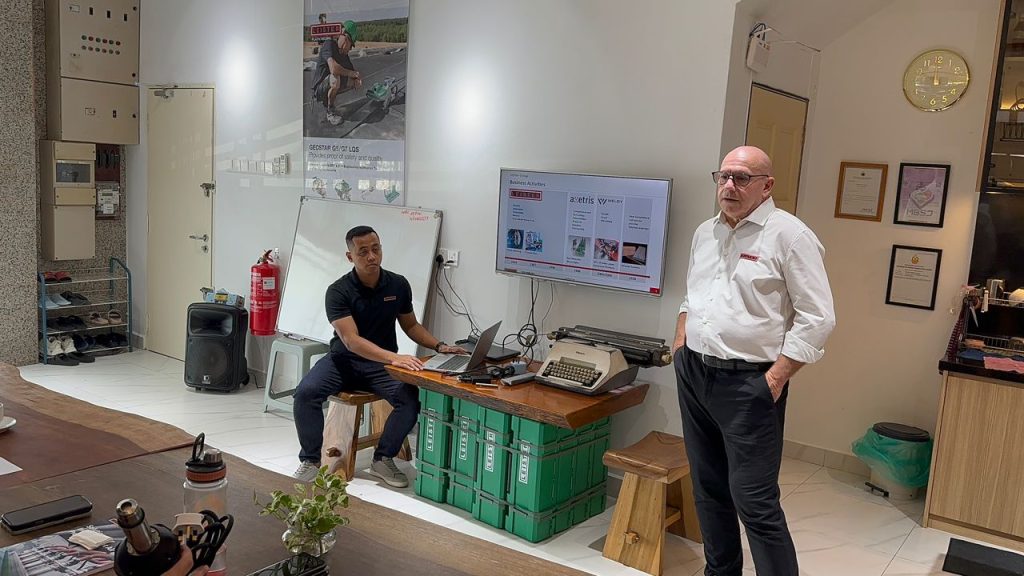
At Weldheat Equipment (M) Sdn Bhd, we are committed to enhancing the skills and knowledge of geomembrane welders through comprehensive training programs. Recently, we conducted a specialized training session focused on water tank applications using Leister extrusion welding equipment and Geotrust HDPE geomembrane materials.
The objective of this training was to provide participants with both theoretical knowledge and practical hands-on experience to improve welding quality, reduce leakage issues, and increase overall competency in geomembrane installation projects.
Understanding the Leister Extruder
Before the practical session began, participants were introduced to the fundamentals of the
Leister Extruder, including:
• Working principles of extrusion welding.• Components and functions of the extruder.• Proper machine setup and operation.• Temperature and welding parameter adjustments.• Maintenance and safety procedures.
Understanding the equipment is essential to achieving consistent weld quality and ensuring reliable performance during field applications.
Characteristics of HDPE Geomembrane
The training also covered the key properties and characteristics of Geotrust HDPE
geomembrane, including:
• High chemical resistance.• Excellent UV and weather resistance.• Superior durability and long service life.• Flexibility and weldability.• Applications in water tanks, ponds, landfills, and containment systems.
Participants learned how material properties can affect welding performance and long-term project reliability.
Hands-On Welding Practice
Following the classroom session, trainees moved on to practical welding exercises using
Leister extrusion welders on HDPE geomembrane samples.
The hands-on training included:• Surface preparation techniques.• Correct welding procedures.• Extrusion bead application.• Welding speed and temperature control.• Common welding defects and troubleshooting methods.
This practical approach allowed participants to gain real-world experience and build confidence in handling actual project conditions.
Quality Control: Peel Test and Shear Test
To ensure weld integrity, participants were trained on post-weld quality inspection methods.
Peel TestThe peel test evaluates the bonding strength between welded geomembrane sheets and helps identify fusion quality issues.
Shear TestThe shear test measures the mechanical strength of the welded joint under load conditions, ensuring compliance with industry standards.
By performing these tests, welders gained a better understanding of quality requirements and learned how to verify the reliability of their welds before project completion.
Training Objectives
The main objectives of this program were to:
• Improve welder competency and technical knowledge.• Provide practical hands-on welding experience.• Reduce leakage and welding defects on site.• Enhance workmanship quality and project reliability.• Increase confidence in operating Leister welding equipment.• Promote best practices in geomembrane installation.Well-trained welders contribute significantly to the success of water containment projects by ensuring stronger welds and minimizing costly repairs.
Continuous Training and Product Development
At Weldheat Equipment (M) Sdn Bhd, we regularly conduct internal training programs to keep our team and customers updated with the latest welding technologies and industry best practices.
In addition to training, we also organize product launches and technical workshops to introduce innovative solutions from Leister and our industry partners.
We believe that continuous learning and practical experience are key factors in delivering successful geomembrane and water tank projects.
Join Us for Future Training Programs
Whether you are a contractor, installer, engineer, or project manager, our training programs are designed to help you improve your skills and achieve better project results.
We look forward to welcoming you to our upcoming training sessions and product launch events.
For more information about our training programs, Leister welding equipment, and geomembrane solutions, please contact Weldheat Equipment (M) Sdn Bhd.
Together, we can improve welding quality, reduce leakage risks, and build more reliable water containment systems. [...]
Read more...
March 23, 2026Leister Solution Team Ready to Serve Your Future Industrial Needs
In today’s rapidly evolving industrial landscape, innovation, efficiency, and sustainability have become essential for long-term success. We would like to express our sincere appreciation to Leister Technologies AG, Switzerland, for establishing the Leister Process Heat Solution Team to support partners and customers across our region.
This dedicated team specializes in process heat solutions, offering technical expertise and hands-on support to help industries adapt to modern manufacturing challenges. By working closely with engineers, maintenance teams, and industry leaders, the team delivers practical, reliable, and efficient heating solutions tailored for the future.
Our Key Objectives
1. Supporting Precision Engineering Projects
The Leister Solution Team collaborates with precision engineers to enhance their understanding of process heat technologies and their applications. Through technical consultation and application guidance, engineers can confidently implement the right heating solutions at every stage of development—ensuring accuracy, consistency, and performance.
2. Upgrading Industrial Systems for Future Needs
As industrial technologies continue to evolve, many production systems require modernization to remain competitive. The team assists industrial and maintenance professionals in upgrading existing systems, enabling improved operational efficiency, enhanced reliability, and readiness for future production demands.
3. Improving Energy Efficiency with Heat Recycling
Energy efficiency is a critical factor in today’s competitive global market. The Leister Solution Team supports businesses in optimizing their production processes through innovative solutions such as heat recycling systems. These technologies help reduce energy consumption, lower operational costs, and maintain high production performance.
4. Supporting Research and Development
Innovation begins with strong research and development. The team actively collaborates with engineers and R&D departments to explore new possibilities, develop advanced solutions, and bring innovative industrial applications to life. Their expertise helps accelerate development cycles and improve overall project outcomes.
Bringing these capabilities together, the Leister Solution Team delivers a comprehensive approach to industrial advancement—bridging precision engineering, system modernization, energy efficiency, and innovation. By combining technical expertise with practical application support, the team empowers businesses to optimize performance, reduce operational costs, and stay competitive in an ever-changing market. From early-stage development to system upgrades and process optimization, their collaborative approach ensures that every solution is tailored to real-world industrial needs. With a strong focus on sustainability and long-term growth, the team continues to support industries in building smarter, more efficient, and future-ready manufacturing environments.
Moving Forward Together
With the support of the Leister Process Heat Solution Team, industries across the region can move forward with confidence—embracing advanced heating technologies, enhancing energy efficiency, and building smarter, more sustainable production systems.
Together with Leister Technologies AG, we look forward to supporting your future industrial needs and helping your business achieve long-term, sustainable growth. [...]
Read more...

October 19, 2021Shrink Tubing
Shrink tubing is a versatile tool for insulating or marking cables, commonly used in both home settings by DIY electricians and in industrial cable harness production. These special plastic tubes, known as heat shrink tubes, contract significantly when exposed to heat, providing protection against mechanical damage and offering electrical insulation. The most widely used method for this application involves hot air, and Leister stands out as a market leader with extensive experience in this area.
Electrical applications
Whether you’re an electrician, a car mechanic, or a DIY enthusiast, heat shrink tubes are invaluable for marking, repairing, and insulating electrical lines.A heat gun is used to shrink the tube around the cable, ensuring a secure and protective fit. In electrical engineering, these tubes are often used to connect two cables permanently, utilizing a prefabricated crimp connection shielded by a heat shrink hose to maintain electrical conductivity. In the automotive industry, these tubes are essential for replacing or repairing cables during vehicle restoration, maintenance, or repairs. Leister and Weldy offer a wide range of heat guns and specialized nozzles, making it easy to achieve perfect results when shrinking sleeves and heat shrink tubes, whether for DIY projects or professional use.
Industrial cable harness production
In industrial settings, cable harnesses are often assembled by hand, with Leister and Weldy heat guns being the tools of choice for continuous, reliable performance.
The process of shrinking tubing in industrial production mirrors that of home use but on a larger scale. Cable harnesses are typically prefabricated in large quantities, with multiple connections marked and insulated using heat shrink tubes. Crimping is also a standard practice, ensuring secure and conductive connections. During final assembly, especially in the automotive industry, cable harnesses are manufactured in various sizes to meet specific customer requirements.
Leister not only provides the necessary hot air tools but also offers special nozzles and accessories to ensure precise and efficient shrink tubing in any application. Whether you’re working on a small DIY project or managing large-scale industrial production, Leister has the right solution for all your shrink tubing needs. [...]
Read more...

October 19, 2021Thermoforming Process
Thermoforming is a highly effective technique for transforming flat plastic sheets into three-dimensional forms. By uniformly heating the plastic, it becomes pliable enough to be molded either through vacuum deep drawing or by using a closed mold with a press. This process is ideal for creating durable, permanently reshaped plastic components.
How Thermoforming Works
Thermoplastics, when heated, soften to the point where they can be easily molded into new shapes. To ensure the material’s flexibility before forming, it can be heated either entirely or partially using hot air or infrared radiation, depending on the specific requirements of the application.
Deep drawing with hot air
In the deep drawing process, Leister air heaters and hot air blowers are used to precisely heat the plastic material before it is formed. Leister’s extensive range of equipment allows you to select the most suitable tools for your specific process, ensuring optimal results.Deburring, a related forming process, involves removing fine, unwanted burrs from injection-molded plastic components. By applying hot air, these burrs are melted and reshaped through surface tension, leaving a smooth finish. Additionally, hot air can be used to separate plastic parts connected by narrow webs after the injection or blow molding process, providing a clean and efficient separation.
Deep drawing with infrared
When deep drawing with infrared, the material is heated using infrared radiation, which is particularly efficient and precise. Leister’s KRELUS infrared heaters offer rapid response times, allowing them to be turned off during non-productive periods, resulting in significant energy savings—especially beneficial for sequential processes.
In the automotive industry and beyond, thermoforming is commonly used to produce molded parts from plastic rolls or sheets. Items such as door panels and parcel shelves are frequently created through this process. For plastics with a thickness of 1 mm or more, KRELUS infrared heating sources are the preferred choice, providing precise and efficient heat application.
The Thermoforming Process
The thermoforming process itself follows these straightforward steps:
Insert the PlasticThe plastic sheet or roll is positioned in the thermoforming machine.
HeatingThe material is uniformly heated using hot air or infrared radiation until it becomes pliable.
FormingThe softened plastic is then molded into the desired shape using vacuum deep drawing or a press.
CoolingThe newly formed part is cooled and solidified, maintaining its new shape.
The key advantage of using infrared heating in this process is its ability to deliver precise, controlled heat, ensuring energy efficiency and superior product quality.
Leister’s advanced thermoforming solutions provide the tools and technology needed for efficient, high-quality plastic forming, making them ideal for a wide range of industrial applications. [...]
Read more...

October 19, 2021Laminating Process
Lamination is a bonding process that involves combining multiple layers of materials to create a fixed, inseparable bond. This process enhances the mechanical and thermal properties of the final product by merging the unique characteristics of each layer. Laminating can be done with or without binding agents, using various methods depending on the materials and desired outcome.
Lamination isn’t just for traditional laminate flooring—it also applies to fabrics like truck tarpaulins and foam. In these applications, the laminating process involves firmly joining several layers using a heat source, either with or without adhesives. This method is widely used in manufacturing, with heat supplied by Krelus infrared heaters and Leister hot air blowers. Leister’s experts can guide users in selecting the right technology and equipment for their specific laminating needs.
Laminating composite panels with infrared
Infrared technology is ideal for laminating foams and various other materials, offering precision and control in the bonding process. By using heat-activated adhesives, thin decorative layers can be seamlessly bonded to a multi-layered core, creating a strong and durable final product. This method is particularly effective for applications that require a high-quality finish, such as in the production of PVC flooring, synthetic leather, and other multi-layer decorative materials.
Laminating with hot air
Hot air laminating is commonly used in applications like kitchen countertops, furniture construction, and laminate flooring. This process involves heating the surfaces of materials evenly before bonding them together.
Wide-slot nozzles ensure uniform air and temperature distribution, making this method perfect for laminating foams in the furniture and automotive industries, as well as in wood processing. The result is a hard, washable, and scratch-resistant surface layer laminated onto carrier plates for enhanced durability.
Leister’s process heat team is available to help users choose the best technology for their laminating applications, ensuring strong, reliable bonds for a variety of industrial needs. [...]
Read more...

October 19, 2021Sterilization Process
Sterilization procedures involve the complete eradication of microorganisms and bacteria, making it essential for equipment used in food processing, medicine, and microbiology. In food preservation, sterilization is achieved at temperatures exceeding 100°C.
Sterilization with hot air
Unlike sterilization, pasteurization involves heating food to temperatures below 100°C to extend its shelf life by killing harmful microorganisms. However, pasteurization does not completely eliminate germs, so the food often requires refrigeration afterward.
In both sterilization and pasteurization, precise temperature control is crucial. Leister’s air heaters and hot air blowers provide reliable process control, making them ideal for integration into sterilization and pasteurization systems. These tools ensure that the necessary temperatures are consistently maintained throughout the process, guaranteeing effective microbial control. [...]
Read more...

October 19, 2021Embossing Process
From car dashboards to synthetic leather handbags with realistic animal hide textures, coated fabrics are integral to many aspects of daily life. These intricate, relief-like patterns are achieved through the embossing process, which is essential for adding both aesthetic appeal and functional textures to materials.
How Embossing Works
Embossing involves creating raised or recessed designs on a material’s surface. To achieve this, the material is first heated, allowing it to become pliable enough to adopt new 3D patterns. Once heated, the material is passed through an engraved roller, which imprints the desired texture. As the material cools, it retains the embossed design, creating a durable and visually appealing finish.
In the production of large-scale, multi-layer plastic textiles—such as synthetic leather, tarpaulins, and floor coverings—heat plays a crucial role at various stages. The final embossing step is particularly important, where the surface structure, like the grain of faux leather, is created. Precise temperature control is critical to ensure a uniform pattern across the entire width of the material. Leister’s KRELUS IR heater field, designed modularly with individually controllable heater groups, delivers precise and consistent surface temperatures, ensuring optimal embossing results.
Embossing Synthetic leather
Synthetic leather, also known as faux leather, typically consists of multiple layers, including a base fabric and a decorative plastic layer, often made of PVC or polyurethane.
During the embossing process, the upper layers are heated and then pressed with an engraved roller to create specific surface textures. These textures can imitate natural materials like leather or wood with remarkable realism or introduce functional designs for added utility. Faux leather offers numerous advantages over genuine leather. Beyond ethical considerations, it is more cost-effective to produce, easier to clean, and available in large quantities, making it a practical choice for the textile industry.
Embossing decorative layers
Embossing is also widely used in the production of decorative layers for wallpaper, floor coverings, and interior design elements. In these applications, the pre-fabricated material is heated at the surface before being embossed with steel rollers, which impart the characteristic surface structure. This process adds both texture and dimension, enhancing the aesthetic appeal of the final product.
With Leister’s advanced heating solutions, manufacturers can achieve precise, consistent embossing results, ensuring high-quality textures that meet the demands of various industries. [...]
Read more...

October 19, 2021Heat Treatment
Whether lipstick or chocolate praline, hot air is ideal for refining food and cosmetic products and is used in many different ways.
In the final step, Process Heat is used to make various products shine or otherwise refine them, such as roasting. The shine on chocolate or on cosmetic products such as lipstick is often created using hot air blowers. Hot air can even be used to gently process, i.e. roast, coffee beans.
Hot Air Treatment
In the manufacturing of lipsticks, the various substances such as wetting agents, mostly consisting of a plant-based gel; wax such as carnauba or beeswax; and pigments, often made from iron oxide, are mixed together and melted.
In one of the last steps of the shining process, the surface of the lipstick is heated with hot air generated by a hot air blower. This gives lipstick its characteristic, seductive shine before it is closed with a lid and finally packaged.In chocolate pralines the ingredients are different, but the process in the production line is the same. Hot air blowers are used to slightly heat the matte chocolate surface, giving it a shiny finish.
Roast Coffee
Coffee usually comes as raw beans from the country of origin. Either in the classic jute bags or as bulk goods in containers. The beans are only roasted in the destination country.
Roasting turns the red fruit with a green coffee core into the well-known brown coffee bean. The roasting process itself takes place at temperatures between 200°C and 400°C or 392 °F and 752 °F, depending on how quickly the roasting process should be completed and roaster dimensions. The heat causes the bean to change colour from green to dark brown. The bean’s own weight can be reduced by up to almost 20 % (also known as burnt-in). In this process the beans are roasted with a stream of hot air – generated by Leister hot air blowers. [...]
Read more...

October 19, 2021Film Shrinking
Hot air is ideal to shrink films and hoses. There are two main areas for this: Heat shrinking in packaging technology and heat shrinking in electrical engineering. Shrink films are often used for packaging.
Basically, these are films stretched in the manufacturing process, which contract to their original shape when heated due to the so-called memory effect.
Shrinking packaging film
In the food and beverage industry, a tubular shrink film is usually placed around the product to be packaged. When it is subsequently heated with hot air, the film contracts until it is tightly wrapped around the packaged product. This process is used for small products, such as lipsticks, as well as entire pallets that have been loaded with goods.
Hot air shrinking is also widely used in beverage packaging applications. Instead of having a label applied to them, individual bottles are often wrapped in a decorative “sleeve.” This may only cover part of the bottle or even extend through the entire height. Another typical application is the use of shrink film to create a pack that ranges from six to 24 bottles or cans. Shrink-on caps are placed over the opening of wine bottles (screw tops or corks) to protect them against contamination, as well as decorative purposes. When these preformed caps are exposed to hot air, they shrink tightly around the neck of the bottle and closure.
Packaging and shrink wrapping products
In logistics, specifically transport pallet logistics, the goods are held together and secured on pallets with polyethylene shrink film. This type of transport packaging via wooden or plastic pallet is standard and is particularly suitable for fast packing and shipping of containers.
This thin packaging film can be purchased inexpensively and it’s easy to recycle. The use of transparent shrink film also allows goods to be examined without having to open the packaging. In addition, the goods are better protected against weather exposure, soiling and damage. Containers are most often packaged and shipped in this manner and then end up at the retailer for the final sale. This can be canned goods or beverages for the food industry or filled paint buckets, varnishes, garden soil for the home-improvement market. All possible goods found in wholesale and retail trade are packed in such a manner that they can be transported on pallets or in bundles.
Protect vehicles
Winter protection, for example of motor and sailing boats, is also possible with a shrink film. With a hot air blower, the dry-docked boat is quickly covered with a polyethylene shrink film and thus protected from the weather, salt water and pollution from bird droppings.
Various vehicles can also be temporarily protected with shrink film for transport purposes. Examples of this are the transport of new cars, which are transported to the destination country on trucks and trains, or the transport of large sailing yachts on the motorway across Europe from one sea to another. To prevent B.
New cars and yachts are not heavily soiled on the road and are better protected from minor damage such as stone chips or scratches, they are usually shrink-wrapped with PE shrink films before transport.
This is not to be confused with vehicle wrapping, which involves the precise application of film to paint. The colored film used here can hardly be distinguished from paint afterwards and is often used for advertising purposes. Information on this can be found under the expertise “Vehicle Wrapping”. [...]
Read more...

October 19, 2021Drying Process
Leister’s heat guns, air heaters, blowers, and infrared heaters are ideal for all kinds of drying processes. These devices are used in various drying applications.
Examples of drying applications can be seen in the manufacturing of paper, textiles, nonwoven material, metals, plastics, and glass components, in film packaging, and in other applications related to foodstuff such as roasting coffee or drying fruits and vegetables.
Drying in Processing
Users can vary the air distribution and flow rate according to the desired drying results. This involves adapting parameters, such as the temperature and air volume, and utilizing different nozzles. Drying with hot air causes two physical effects to occur at the same time. Together, they further increase the efficiency of the drying process. Firstly, hot air can hold considerably more moisture than cold air.
Secondly, the continuous current of air that passes over the wet surface increases the rate of evaporation, particularly if fresh, dry air is always used.
To make the drying process even more efficient, hot air is often used to blow off any stray drops of moisture on the surface before drying begins. Leister has a solution for this too, offering a blow-off nozzle specially developed for this purpose and the powerful AIRPACK blower.
Drying with Infrared
Truck tarpaulins can be cut open almost silently with a knife, allowing cargo to be stolen unnoticed by the driver, e.g. by the driver B. during rest periods.
Just like the sun, the drying effect of infrared heaters is caused by infrared rays. Thanks to direct heat transfer, drying paint and dye on metal, plastics, wood, and textiles is an immediate and dust-free process. Infrared heaters are used in the textiles industry, in fabrication prosesses of nonwoven and other fabric materials as well as in paper manufacturing and in printing machines.
The medium infrared radiation from Leister infrared heaters is also effectively absorbed by water. In doing so, the infrared heating directly heats the water, making the drying process even more efficient.
Drying with Infrared
With their broad range of application, heat guns are used for drying processes not only in automobile manufacturing assembly plants, where, for example, scratches in the paintwork are repaired and quickly dried with hot air, but also in craft businesses or by hobby crafters in their home workshops. Leister and Weldy’s heat guns can be used for any application where hot air is needed. [...]
Read more...

October 19, 2021Welding Truck Tarpaulins
Truck tarpaulins and event tents have to withstand wind and weather. During production, the focus is on economic efficiency.
The material is generally made of durable PVC. In addition, the extremely resistant tarpaulin material is flame-retardant, robust and tear-resistant. Professionally processed, PVC truck tarpaulins are durable and weather resistant.
Welding truck tarpaulins
Every day, tons of goods are transported on the roads by truck and by large and small vans. Truck tarpaulins need to be practical, secure the load in an optimal way, and be customizable. Transport companies often have different requirements for their truck flats, whether in terms of appearance or function. They are usually produced by hand.
Depending on the vehicle equipment, standard soft top and side curtain systems, also known as side curtain, sliding tarpaulins, rolling tarpaulins and central tubular tarpaulins, are produced to enable the goods to be loaded, transported, and unloaded in the best possible way. The printing of the tarpaulin with the company logo or corresponding advertising completes the order. With welding machines and hot air blowers from Leister, commercial vehicles are optimally and efficiently equipped with suitable tarpaulins.
Securing a truck load
Truck tarpaulins can be cut open almost silently with a knife, allowing cargo to be stolen unnoticed by the driver, e.g. by the driver B. during rest periods.
However, if the truck tarpaulin is reinforced with so-called “anti-vandalism bands,” theft is much more difficult. Leister offers a suitable tape welding machine for reinforcing the truck tarpaulin with anti-vandalism tape. The investment is definitely worth it: According to TIS (the General Association of the German Insurance Industry), 10 to 15 billion euros worth of vehicles and cargo are stolen every year in Europe alone. [...]
Read more...

October 19, 2021Welding Tents
Party tents and festival tents have primarily been designed rectangularly.
In addition to the classic circus tent, pagoda tents and hexadomes are gaining popularity as well. Flexible tents for events are easy to transport and can be quickly erected and dismantled, no matter where. Because they are foldable, they are also easy to store. The roof and the side panels are made of tarpaulin material, the floor is made of wood, PVC or other heavy duty floor materials when needed. These tent constructions are erected at the destination and anchored with pegs or weighted stones. Tent windows can be made of PVC or even glass. Wind speeds of 80-100 km/h or 50-62 mph are taken into account as standard in the manufacture of large event tents. Whether beer festival or wedding – the tents protect the visitors and guests safely from nature’s harsh elements.
Welding tents
Welding perfect, tight seams is essential, especially for mobile tent construction. The tent variants, which are often made to customer specifications, should be durable and welded watertight.
Welding machines must be able to produce tents in various shapes in addition to the standard rectangular shape. Using the right design and tools, event tents are produced as the perfect setting for every event. Whether it is a cultural event in the city, a wedding in the forest or a corporate event held on company premises. Leister welding machines not only work efficiently, they also weld nearly every imaginable tent shape. [...]
Read more...

October 19, 2021Pool Waterproofing
Swimming pools are made from various materials. A swimming pool that is lined with vinyl is one option. Independent of size and position, vinyl membranes are used during pool construction. In this option, unique pools can be created based on the user’s preferences.
Long durability and tightness of the liner material are great advantages compared to materials such as tiles or paint. Over time, the surface of tiles can flake off unattractively, joints turn black and paint flakes off. The care and maintenance of swimming pools made of liner membranes is also easier and less time consuming.
Pool landscapes welded
Resorts and spa facilities are popular. Reproduced beaches with wave pool, water slides and various pool facilities will be realized. Even gigantic projects have almost no limits. With flexible geomembranes these bathing landscapes can be easily customized. The proven Leister automatic welding machines are used for welding the Geomembranes. Suitable connections and repair work can be carried out with hand extruders from Leister. This way the bathing area can cope with high user demand.
Water slides and swimming pools made of HDPE
In water parks, elements made of the plastic HDPE are used in various places. Especially for water slides and swimming pools. These are assembled from several pieces and welded together with hand extruders.
Pool covers welded
Pool covers have numerous advantages. They protected the pool from external influences and contamination by leaves and bird droppings. At the same time they prevent the water from evaporating quickly and cooling down too much.
Pool covers increase the economic efficiency, because they reduce the energy and operating costs of swimming pools. With Leister automatic welding machines and stationary welding machines, both inflatable and floating pool covers of any size and shape are produced efficiently and to a high standard of quality. [...]
Read more...

October 19, 2021Welding Inflatables
Inflatable objects like boats, emergency slides, advertisements, bounce castles, sports equipment, balloons, mats, structures and even air domes.
For objects that are filled with air, the absolute seam tightness must be guaranteed. Leister hot-air machines meet these requirements. Even with welding machines, Leister offers the possibility of tightly welding and bonding overlap seams, fillet seams and hem seams made of different film materials.
Hoses
For example, for flood prevention using flexible barriers, rescue slides in airplanes, inflatable rescue and decontamination tents. These are welded with heat guns and welding machines, and they are sealed with tape in order to make them waterproof and airtight.
They can be manufactured in all possible shapes for the precise requirements of their application. [...]
Read more...

October 19, 2021Flexible Tank Welding
Flexible tanks are often used to contain a variety of liquids such as petroleum, drinking water, rainwater, sewage, chemicals or gases.
Compared to steel tanks, flexible tanks are comparatively light and portable, easy to store (can be folded) and require little effort to set up. They are robust and long lasting; ideal for use in demanding situations or those requiring a high degree of safety. This includes, for example, military purposes, or in the context of infrastructure, technical, sanitary or organizational emergencies, on construction sites, at harbors and more
Biogas container welding
Biogas is gaining importance because it is a multipurpose and storable energy. In addition to electricity and heat generation, Biogas is becoming increasingly attractive as a fuel for motor vehicles.
Biogas production is a basis for an economically and ecologically attractive use or re-use of locally available resources. For example, biogas plants offer access to clean energy for cooking in places such as Africa, Asia and Latin America. Because biogas plants use wastewater and livestock manure, wood is no longer needed for cooking. This not only creates new sources of income, but has a positive effect on the environment and health.Biogas and compost plants are also becoming increasingly popular in Europe, often built on a larger scale than competing alternatives, yet remaining compliant with high safety and environmental standards. Gas production is based on the same principle, however.The fermenters filled with grass, manure, food waste from the catering sector and fermentable grain material generate biogas during the fermentation process. These plastic containers are welded or sealed with adhesive tape using Leister welding machines and hand-held blowers. This means no gas can escape. [...]
Read more...

October 19, 2021Welding Awnings and Shades
Most awnings are made from PVC-coated acrylic or polyester. They are robust, watertight, dirt-resistant, and water-repellent. Since awning fabric sheets are mainly produced with fixed widths, they must be welded together.
Leister’s high-quality equipment welds sheets together quickly while ensuring that welds are watertight. This allows for awnings and shades to be pre-cut to size. Also, unlike fabrics that are sewn together, seams that are welded result in a smoother finish with a more aesthetic appeal. Since awning fabrics are generally produced with fixed widths, the sheets have to be welded together. Leister speeds up the finishing process by welding sheets together and making them watertight. This allows the tarpaulin for the shades and awnings to be pre-cut to size. Also, unlike fabric parts that are sewn, seams that are welded in this way are smooth and less noticeable.
Awnings
Awnings are typically used to provide color and architectural accents as well as protection from the sun. The harmful effects from UV rays are greatly reduced, making it easier to enjoy warm weather in the shade on a balcony, terrace or other location.
Awning fabrics are subject to direct sunlight, strong winds and sometimes humidity and rain. To ensure that the awning has a long life and can withstand intense use, both high-quality fabrics and a reliable welding process are essential. The individual sheets must be properly joined to produce a perfect, watertight fit. Hem seams, piping, and concave welds must be capable of withstanding great strain. With Leister’s welding machines like SEAMTEK, producing durable welds is no problem at all. Leister’s welding machines and heat guns are excellent choices for awning manufacturers. Awnings have been organized into wind resistance classes for the customer’s reference. In addition to color and pattern, another criterion for selecting an awning is whether it is dirt-resistant, which will result in less maintenance.
Awnings come in different designs for different uses: cassette awnings, half cassette awnings and folding arm awnings, all available as electrical and manually extendable versions. There are also specialty awnings such as mobile awnings, clamp awnings, vertical awnings and side awnings, all of which are mostly used for wind protection.
More information about shades and awnings for larger architectural projects and buildings can be found in the expert’s report, “Textile Roofs and Facades.”
Shade Sails
Shade sails, as well as other flexible shades and awnings consist of a large, flexible piece of tarpaulin or fabric and most are made from synthetic fiber. These shade sails and flexible shades and awnings are not affixed to a vehicle or house, but instead mounted and dismantled as needed.
Shade sails, awnings and shade screens are easy to retract on campers and motorhomes using the specially mounted tracks. Shade sails must also be equipped with hems, pole pockets and grommets.Shade sails are a standard feature in motorhomes and campers, intended to provide protection from the sun. Although permanently installed awnings are not always the best choice for motorhomes due to their weight and/or location, shade sails are a great alternative.
Using the tailor-made Leister welding machine, HEMTEK K-ST, piping can be made easily and quickly, without having to make grueling changes that occur with a sewing machine. The HEMTEK K-ST is quick, sleek and efficient, making it perfect for shade sails with durable piping. Camping is back in style and shade sails can be a lucrative source of revenue. [...]
Read more...

October 19, 2021Sealing of Reservoirs and Canals
Seams must be impenetrable for protective clothing, sporting and outdoor apparel. Needle stitching always leaves holes, no matter how tiny. Whether a seam is sealed with tape or two thermoplastics are welded together directly, Leister has a solution thanks to our wide range of welding machines.
Outdoor equipment and apparel
Outdoor apparel and equipment for hikers, cyclists and winter sports enthusiasts must not only be comfortable, they must be functional as well. In addition, these “functional textiles” are also worn in everyday life. Adjusted to the respective sport, they must protect against wind and varying weather conditions, keep the body warm, maintain breathability and dry quickly.
The seams of these outdoor jackets, hiking pants, softshell jackets, backpacks and tents that are suitable for the respective activity must be welded tightly and reliably with hot air, hot wedge, or sealed with tape.
Many well-known companies are now using the proven technology and reliability of Leister’s SEAMTEK welding machine. Backpacks, bags, fishing and hunting apparel, diving suits, outdoor jackets and pants are all reliably welded and
Protective clothing
Canals in this case refer to large-scale construction projects, from rainwater drainage along the motorway to a navigable canal. Tight seams save lives in these areas. Various synthetic fibers and membranes are used depending on the application. These can be thin, disposable, polyethylene suits made of nonwoven fabric that protect against particles, water-based chemicals and dusts, as well as thick, personal protective suits that completely isolate the individual from the surrounding environment. These suits also protect against exposure to radiation, chemically/bacterially contaminated environments, and they are consequently used in the event of chemical or hazardous goods accidents, epidemics and pandemics. In this case, the suit often has enough room for a respirator that is independent of the ambient air.
The protective properties of clothing must be retained for as long as possible. With the right Leister welding machine, users can produce precise and tightly sealed welds with tape, i.e. glued or alternatively welded according to requirements, in an airtight and watertight manner. [...]
Read more...

October 19, 2021Sealing of Reservoirs and Canals
In sealing systems for water reservoirs and canals, tightness is a high priority. The sealing system is usually made of HDPE, PP, PVC or TPO material.
Welding must ensure that the material remains completely leak-proof over a long period of time. In order to ensure the safety of the sealing system, reliable equipment is required with which welding can be carried out quickly and economically. The small and handy COMET and TWINNY automatic welding machines from Leister adapt perfectly to the topography of the substrate and weld the plastic geomembranes securely and permanently. Related application areas include aquaculture and tunnel construction.
Reservoir construction
Water reservoirs are necessary to ensure the supply of drinking water even at peak consumption times. The spring, ground or sea water is collected and stored in reservoirs.
These reservoirs must be tightly welded and the liners used must have a long shelf life to prevent water seeping into the subsoil. Geomembranes are welded waterproof with Leister automatic welding machines. Testing equipment, also available from Leister, is then used to check whether the seams are tightly welded and hold.
Canal construction
Canals in this case refer to large-scale construction projects, from rainwater drainage along the motorway to a navigable canal.
In all these civil engineering projects, geomembranes are welded waterproof to protect against water loss into the subsoil or to protect against flooding by heavy rain. With Leister welding machines, large construction projects are no longer a challenge. The Leister testing equipment guarantees the welding seam integrity and the LQS system also documents the quality of every meter of Geomembrane welded. This is how Leister helps construction projects succeed. [...]
Read more...
October 19, 2021Sealing of Reservoirs and Canals
In sealing systems for water reservoirs and canals, tightness is a high priority. The sealing system is usually made of HDPE, PP, PVC or TPO material.
Welding must ensure that the material remains completely leak-proof over a long period of time. In order to ensure the safety of the sealing system, reliable equipment is required with which welding can be carried out quickly and economically. The small and handy COMET and TWINNY automatic welding machines from Leister adapt perfectly to the topography of the substrate and weld the plastic geomembranes securely and permanently. Related application areas include aquaculture and tunnel construction.
Reservoir construction
Water reservoirs are necessary to ensure the supply of drinking water even at peak consumption times. The spring, ground or sea water is collected and stored in reservoirs.
These reservoirs must be tightly welded and the liners used must have a long shelf life to prevent water seeping into the subsoil. Geomembranes are welded waterproof with Leister automatic welding machines. Testing equipment, also available from Leister, is then used to check whether the seams are tightly welded and hold.
Canal construction
Canals in this case refer to large-scale construction projects, from rainwater drainage along the motorway to a navigable canal.
In all these civil engineering projects, geomembranes are welded waterproof to protect against water loss into the subsoil or to protect against flooding by heavy rain. With Leister welding machines, large construction projects are no longer a challenge. The Leister testing equipment guarantees the welding seam integrity and the LQS system also documents the quality of every meter of Geomembrane welded. This is how Leister helps construction projects succeed. [...]
Read more...

October 19, 2021Pond Waterproofing
Swimming pools and garden ponds are focal points in any backyard.
In order to ensure a safe sealing system, reliable tools are needed. Ones that are not only weld perfectly, but can also work across large areas economically and ergonomically.
Garden pond liner
Many dream of a pond in their garden. A lined pond allows for individualized pond design. Even large pond areas can be realised in this way.
Unfortunately, the membrane has the potential to incur damage, making it a disadvantage as a pond liner. Membranes must firmly welded so that the pond remains securely sealed. With Leister heat guns, the appropriate welding machines and accessories for professionals, homeowners with backyard ponds will enjoy them for a long time to come.
One should carefully consider the introduction of fish and the design of the biotope. Ornamental fish require sufficient space so that the water in the pond does not overflow. Biotopes should be located in an appropriately quiet area of the garden, so that the native animals and insects are not disturbed. Tips and information about this can be found in books and on the internet. An expert on ponds and biotopes can provide advice and help implement individual projects.
Swimming pools
Swimming ponds and natural pools are not the same thing. A natural pool consists of a swimming area, which looks like an ordinary swimming pool, but has an adjacent regeneration zone. A swimming pond is more like a garden pond, but has a deeper swimming zone.
The filtration of the water is also a distinguishing feature. For example, a natural pool needs a filter that pumps the water back and forth between the regeneration zone and the pool. A swimming pond does not need a filter system if it is large and deep enough. Both variants use liner membranes for sealing.
Projects on this scale represent a great challenge for laymen, but are not impossible. It is recommended that you work together with pond or pool experts who, with the appropriate Leister equipment such as hot air blowers for precision work, extruders for welding connections and professional automatic welding machines for pre-fabrication and welding of the pond liner, can make the dream of a natural pond or swimming pond come true. [...]
Read more...

October 19, 2021Membrane Welding for Landfills and Mining
For landfills and mines, the quality of the sealing system is top priority, since the presence of leaks can have fatal consequences.
So, it is extremely important that the workmanship on geomembranes made from PE can meet the highest quality standards. It is the responsibility of the manufacturer to ensure a high degree of precision in the production of the geofilm. Leister’s welding machines and heat guns not only allow for high-precision welding but are also characterized by their “intelligence”. Thanks to the Leister Quality System (LQS), welding machines such as the GEOSTAR G5 and G7 can record all welding parameters, including GPS coordinates. Use the LQS app to manage data and generate reports. What’s more, Leister’s testing devices allow the user to check that seams are tear-resistant and securely welded.
Landfill and Mine Construction
When it comes to constructing landfills and mines, the sealing system is the focal point of the installation. Its reliability is crucial to ensuring safety. HD-PE or LD-PE is typically used as the bottom geomembrane and can be up to 3 mm thick. Leister offers welding machines for all requirements, as the hot-wedge and combi-wedge machines are designed differently in terms of welding force, welding speed, and data recording features.
In mine construction, the material, which is loosened mechanically or by blasting, is washed out in collecting basins (heap leaching pads). The waterproofing system ensures that chemicals dissolved in water do not escape into the groundwater or contaminate the soil.
From the powerful automatic machine GEOSTAR to the lightweight TWINNY, there are various models from Leister for welding geomembranes. They all have special nozzles, heating wedges and pressure rollers and are ideal for welding lap joints with test channel.
In the test channel, the post-weld tightness is tested using the Leister test needle and compressed air. This method was developed by Leister in 1977 and is a global standard today. In addition, Leister offers further devices for weld seam inspection with EXAMO, vacuum box and test bell. [...]
Read more...

October 19, 2021Aquaculture Construction and Repair
Aquaculture, also known as aquafarming, involves farming aquatic plants and animals, including fish, mussels, crabs and algae.
This applies to tanks filled with salt or freshwater, artificial ponds, as well as lakes, rivers or the sea. It is safe to assume that approximately half of all fish and seafood does not originate from natural waters. New growing methods involve a combination of fish farming and crop farming though, each of which promotes the other. This is also known under the name of aquaponics or integrated multi-trophic aquaculture. Leister’s extrusion welders, automatic welders and heat guns are all needed to build and maintain every form of farming installation.
Read more
Fish farming in open waters
Aquaculture in open waters is becoming increasingly important. In this case, a distinction is made between the water itself: freshwater or saltwater, river, lake or sea, and of course its distance from land. These are called near-shore or offshore cultivation systems. In the usual near-shore fish farm, round net cages are placed in rivers or in the sea just off the coast. The reinforcements on the plastic pipes, which keep the net cages buoyant and afloat, are welded with extrusion welders.
Offshore fish farms are placed far out to sea and are therefore located in deeper waters with stronger currents. Huge fish tank systems welded from HDPE are a new addition here. These are completely closed eco-systems that can be made fully controllable. Welding parts for these mega-projects must be professionally sealed and durable. The thermoplastics used in this process are corrosion resistant, which is particularly important when used in water. These new offshore systems should not only be better for the environment, but they should also ensure more economical and sustainable fish farming. As a result, fish can be farmed free from ectoparasites such as fish lice. Additionally, fish waste is recycled without being returned directly into surrounding waters unused and unfiltered.
The aquaculture sector is constantly on the move and highly innovative. For example, attempts have already been made to combine offshore wind farms with aquaculture in order to use the sea more effectively and sustainably. Leister offers a full range of extrusion welders and heat guns, as well as a variety of nozzles for this application area. In particular, the Leister extrusion welder is specially designed for the construction and maintenance of offshore and near-shore fish farming facilities.
Fish farming in open waters
Fish farms are comprised of geomembranes for a watertight weld. Water consumption is reduced and the ground beneath the farms are protected from leaks.
Fish farms on land are usually artificial, film-lined and sealed for farming a range of consumable and decorative fish, such as carp or koi. Monitoring water quality is important for maintaining healthy fish stocks and obtaining good yields. A film-lined fish farm makes this easier to achieve.
For the most part, such sealing systems are made of HDPE, LDPE, PP or TPO material. But the material alone does not make for a good fish pond. The geomembrane weld must be absolutely watertight. This makes regulating the water composition easier. A secure sealing system can be guaranteed with the right compact and handy welding machines. This equipment adapts to uneven surfaces for overlap welding with hot wedge technology or hot-air welding technology from Leister.
Hygiene is also an important aspect of fish farming. Water is simply drained from film-lined fish farms and then cleaned in the usual way. In conventional fish farms without film, the water is easily contaminated by bacteria and germs from the natural clay or lime soils. This can be avoided by using a geomembrane.
The corresponding testing devices, such as test needles and the EXAMO force testing device from Leister guarantee the required watertightness and tear resistance. Extrusion welders are used to weld the necessary connections and remaining details for the fish farming systems.
Indoor HDPE Fish Farming Tanks
Thanks to new developments in water filtering and circulation technology, indoor fish farms are not only getting bigger, but also generate greater yields. The benefits of these developments are the decreased need for fish medication and, more recently, the possibility of breeding more sensitive species. Modern fish tanks made from HDPE facilitate ideal conditions for each species, including salmon, perch, zander, and crustaceans.
Optimized living conditions make for a better quality of life. For instance, higher quality meat can be produced by generating currents that induce salmon to swim. Additionally, certain diseases and parasite infestations can be avoided or completely eliminated in controlled tanks.
Water flows in a closed circulation system, meaning the fish cannot escape the tanks and that no wastewater leaks directly into the sea or rivers. As a result, this method of fish breeding proves to be an environmentally friendly alternative to aquafarming in the open sea or river channels.
Aquaponics is another area where tanks are used for fish husbandry. Aquaponics is the combination of hydroponics for cultivating plants and aquafarming, i.e. the breeding of mostly freshwater fish. The wastewater from the fish tanks provides nutrients vital to plant growth, which would otherwise lead to eutrophication and become toxic for the fish.
Most fish breeding tanks are made from HDPE plastic and fabricated with the help of hand-held extruders. These non-corroding containers are more economical than similar tanks made from steel in terms of manufacturing costs and life cycle expectancy. These installations can also be readily expanded as desired, since the material is easily welded. They are also very easy to clean, which helps to facilitate husbandry conditions. [...]
Read more...

October 19, 2021Plastic Tank Fabrication
Leister also offers a wide range of equipment for welding thermoplastic materials such as HDPE, PP, PVC-U, PVC-C, PA, PVDF, and ECTFE used to manufacture complex products such as fans and pumps.
Hand extruders are designed for extrusion welding in the performance classes 0.2 to 6 kg/h or 4.4 to 13 lb/h output. In addition, the ergonomic hand tools are ideal for tacking, draw-welding and heating the plastic. Leister’s handheld extruders are used all over the world. Their handiness, unique technical features such as the multifunctional control panel and their proverbial reliability make them indispensable for users all over the world. [...]
Read more...

October 19, 2021Plastic Repairs
Many different plastics can be repaired with warm air. This includes children’s slides, waste containers made of hard plastic, bumpers and many more. Simply check the type of plastic and weld with hot air. Extrusion welding machines and handy hot air blowers from Leister are suitable for this purpose.
Damage to waste containers is not covered. example, can be repaired using the portable extruder FUSION 1. For this purpose, holes in the outer wall of the containers are welded with matching plastic parts and cracks are closed with plastic wire. Repairs eliminate the high costs of new purchases and conserve natural resources such as mineral oil. At the same time, additional waste is reduced, which protects our environment.
Repairing plastic containers
Cracks in the garbage can, in the waste container or in the plastic children’s slide? Broken plastic containers and objects can be quickly repaired with an extruder or hot air blower including a suitable drawing nozzle and welding rod.
In this way, municipalities can effortlessly maintain and repair waste containers or playground equipment instead of buying new ones. This protects the environment. And the resulting savings are easy on the budget. For the repair of intensively used objects made of plastics, the purchase of a hand extruder is therefore doubly worthwhile.
Repairing plastic
Many used cars and motorcycles have plastic trim strips, bumpers or rear skirts that have faded over time.
After a treatment with hot air they look like new again. This increases the resale value. With Weldy hot-air blowers from Leister, this task is completed quickly and reliably. [...]
Read more...

October 19, 2021Welding of Pipes and Pipelines
Extruders and hot-air hand tools from Leister weld and connect HDPE pipes in all sizes permanently and safely – from sewage pipes to pipelines several kilometers long.
The expertise here clearly lies in the permanent and reliable welding of plastic elements with hand extruders from Leister. Because these pipes and tanks carry liquids and gases, they must be protected from external damage and welded tightly so that they do not leak.
Corrugated and wound tubes
Corrugated pipes and wound pipes are usually made of PP or HDPE. Both pipe types have a high temperature resistance, are corrosion-free and withstand static pressure well. They are used in various industries, with coiled tubing more suited to large volume containers.
The material HDPE, of which both corrugated and wound tubes are made, can be used for storage tanks and transport pipes for liquids – drinking water and chemical substances – in apparatus and tank construction thanks to its properties. The prefabricated individual parts are joined permanently and tightly together with hand extruders from Leister.
Jacket pipes
The foam-insulated and plastic-coated steel pipes are often used as transport pipes for liquids and gases such as water, oil and chemicals.
Insulation is particularly important for district heating transfer. The jacket pipes offer additional space in the insulation for line pipes with heating cables and for leak detection wires. Extruders from Leister are used in particular to connect Y-junctions and bends with the main pipes. [...]
Read more...

October 19, 2021Boat Construction and Repair
Thanks to the large selection of hand-held extruders, welding machines and heat guns, manufacturing and repairing plastic boats, inflatable boats, ballasts and freshwater tanks made from foil membrane can be done with ease. Depending on the material of the boat, LEISTER’s heat guns have a wide range of potential applications.
This is how hand-held extruders can be used for manufacturing hard, plastic boats. Inflatable boats made from light coated tarpaulin materials can be joined together using welding machines like the SEAMTEK (with or without tape), heat guns or even infrared heaters. The drying process can be sped up with warm air, particularly for repair work. LEISTER offers suitable hot air solutions for a wide range of boat construction projects, which can be used in manufacturing as well as professional or DIY repair work.
HDPE Boats
This makes HDPE boats nearly maintenance-free. Unlike other boat materials, this material is also environmentally friendly and cost-efficient. Furthermore, it absorbs vibrations, making for a better and more enjoyable experience for passengers.
These plastic boats are mostly produced for customers in the commercial sector who use them for lifeboats/workboats in the fishing industry, as well as police and military use (personal security, coastal region water security, etc.).
Leister’s hand-held extruders and heat guns are the ideal tools to produce HDPE boats.
Welding Inflatable Boats
Inflatable boats, sometimes referred to as rubber dinghies, have an inflatable tube for a hull. They are produced from plastic film, mainly PVC or synthetic rubber, such as PU.
Storing these boats is made easy thanks to their valve, which lets the air out.
In addition to the classic inflatable boat made for two people to paddle on a lake, there are other variants, such as inflatable kayaks and rafts. Last but not least, there are lifeboats used for ships and airplanes.
Inflatable boats can be welded with hot air and sealed with tape to ensure complete watertightness and a long life-span. These 3D forms can be constructed using Leister’s welding machines. Heat guns make repairs easy as well.
Peel test: Flame vs. BITUMAT
Various tanks made from hard plastics or flexible membrane materials are used on all kinds of boats. These include freshwater tanks for drinking water, wastewater tanks and ballast water tanks for speedboats, such as those used for wakeboarding. Tanks that are made from food-safe polypropylene or tarpaulins, depending on their intended application, have an advantage over flexible containers since they can be firmly anchored in place, thus preventing any shifting.
Most of them have an opening large enough for ventilation, filling and draining with a gas-tight seal. Other advantages include their longer life-span and greater stability, making them more environmentally friendly. The sanitary tanks can also be used in campers, vans or motorhomes and can be installed by both professionals and those with less experience. The hard, plastic tanks are primarily manufactured and repaired with extruders. Tanks that are made from flexible material are joined together with tape using welding machines, i.e. glued or otherwise welded and thus made watertight. [...]
Read more...

October 19, 2021Covering walls
Wall protection plates and wall coverings made of hard PVC (vinyl) are nowadays indispensable in hospitals, medical practices, rehabilitation centers and other health care facilities as well as in schools, kindergartens, production facilities and clean rooms. This is due to their outstanding technical and optical properties.
Thanks to products from Leister, the installation process is smooth and at the same time the service life of the wall covering is lengthened. After all, if the joints of the adjoining UPVC sheets are correctly thermally welded with Leister plastic welding equipment such as the HOT JET S, TRIAC AT or TRIAC ST, dirt, bacteria and germs don’t stand a chance. Backflow of cleaning fluids is also prevented.
Resistant and decorative
The antibacterial wall cladding impresses with its extremely high impact and joint resistance and thus prevents damage to the plaster and masonry. This is particularly important in corridors, stairwells and walls in schools, production sites as well as in health facilities and operating theaters.
In addition, the surfaces are extremely easy to clean and have a high resistance to disinfectants and other cleaning agents. Thanks to a variety of colors and decorations, the rooms can also be visually appealing and individually designed.
Prefabricated items
Manufacturers of these wall coverings are usually also suppliers of the elastic floor coverings used, made of plastics such as PVC (vinyl), PUR, CV, LVT. This allows the wall coverings to be connected directly to the floor coverings and welded with them. This makes cleaning easier. For edges as well as inner and outer corners, the manufacturers offer prefabricated elements. These pre-formed parts greatly reduce installation time. If they do not fit directly, the plastic panels can be thermally shaped accordingly. Leister devices such as the ELECTRON ST are also suitable for this purpose. [...]
Read more...

October 19, 2021Resilient Flooring Installation
Flexible PVC or linoleum flooring can be used virtually anywhere, from buildings to trains. In order to ensure that these floor coverings are durable and meet all legal standards/requirements, the exact laying procedure must be carried out.
Leister equipment supports floor installers in laying economical and precisely sealed floors. Regardless of whether it is a matter of flexible floors in the private or public sector. The requirements are constantly increasing. And not only in public facilities and transport, but also homeowners and tenants expect long-lasting, easy to maintain floors that look good.
Innovative floor laying
Leister invests considerable energy into the flooring industry to continuously expand its expertise, strengthen its market position and help flooring professionals increase their productivity and the quality of their floor laying abilities. With the development of new and enhanced floor welding machines and smart accessories, Leister supports flooring professionals worldwide with their physically exhausting trade.
Leister and flooring professionals, including their apprentices, benefit from active cooperation in associations and organizations such as “Boden Schweiz” or “Fachverband elastischer Bodenhersteller”, or FEB . Leister’s experts quickly identify needs and trends and quickly turn them into reality thanks to their internal product designers and developers. It’s not by chance that Leister hot air tools are firm favorites with flooring professionals around the world.
Well sealed floors
Leister supports flooring professionals all around the world with the right devices to lay flooring efficiently, precisely and watertight, while also making them easy to clean and maintain. This leads to germ-free, hygienic and easy-to-clean surfaces being a high priority in offices. This is particularly the case on surfaces exposed to high humidity levels like the medical field, from laboratories to hospitals.
In this application, Leister hot air tools are outstanding for laying hygienic baseboards, including the curved baseboard using flexible flooring material.The thermal and durable seamed edge sealing largely prevents porous, unsealed areas. This makes PVC and linoleum flooring a good alternative to tiles and wood flooring. This also applies in particular to areas subjected to intense wear and tear, such as schools, public buildings and commercial premises, from loading areas to warehouses. [...]
Read more...

October 19, 2021Welding Pitched Roofs
The pitched roof is definitely the most preferred roof type in privately owned homes. This is true not only for cultural or visual reasons. The construction and maintenance costs are lower for pitched roofs. The facade is protected by pitched roofs, and rainwater can drain effectively due to the incline.
The subroofing membrane as a part of the roof structure, which is laid under the actual roof covering, i.e. under the roof tiles, is a second water-draining layer that protects against drift water, capillary, backwater and condensation water as well as against dirt. If a roof membrane film is used as a subroofing membrane, it can be welded with Leister automatic welding machines.
New regulations in some European countries require homogeneous welding of roofing underlayments. Adhesive tape joints are no longer permitted. Under-roof membranes are required for additional protection under the sloping roof shingles. Both types of welding – from bottom to top and from top to bottom – are easily possible with Leister welding machines. Thanks to the optimized wedge geometry, even thin membranes (0.3 – 1.0 mm) can be welded perfectly.
For plumbing work on the roof, Leister offers special nozzles that make work easier for roofers and plumbers. Rain gutters and other metal parts made of copper, zinc and chromium steel can be soldered flamelessly and in an environmentally friendly way with the TRIAC AT and the corresponding soldering iron kit.
Properly weld the roofing underlayments
Only a few correctly executed steps are required to make the welded roofing underlayment meet performance standards.
With the right membrane material and the use of high-quality welding machines and manual welding devices, every category of sub-roof can be welded perfectly, no matter whether normal, increased or extraordinary stress is expected on the roof.
SIA Standard 232
New regulations have applied for roofing underlayments since the introduction of the SIA Standard 232 in 2000. Sub-roofs are subdivided into three different categories:
normal stress for customary water drain-off
increased stress – waterproof against water accumulation of max. 50 mm
extraordinary stress – just as with increased stress with additional backwater protection
Changes to the SIA Standard 232/1:2011
The revision of the SIA Standard 232/1:2011 makes a uniform provision and classification of the roofing category possible and thus has an influence on the selection of material and design of a sub-roof.
Starting at a reference altitude of 800 m above sea level, a sub-roof is required for extraordinary stress.
Independent of the reference altitude, in thermally insulated roofs with a roof pitch of less than 15°, a sub-roof is required for extraordinary stresses. Requirements of sub-roof materials for extraordinary stresses:
Sub-roof systems and materials must withstand the expected high pressure (water level 50 mm). Homogeneous welding of overlaps and connections, and special sealing of penetrated spots must be ensured. [...]
Read more...

October 19, 2021Welding Flat Roofs
Flat roofs must be welded watertight to ensure long durability and to prevent water damage to the interior. Leister automatic welders and heat guns are the first choice when roofs need to be welded. Roofer’s require a welding machine that keeps setbacks to a minimum on the job site.
Leister automatic welders and heat guns are the first choice when roofs require welding. Roofer’s dream of a welding machine that keeps setbacks to a minimum on the job site. There is nothing more frustrating than a machine that fails during welding. Failures mean additional work and costs for roofers. They must be able to rely on their welding tools. Even when using a generator, the welding machines must function reliably.
Leister offers roofers the right solution with a complete range of automatic welders and heat guns to weld roofing membranes on flat roofs.
Flat roof, overlap welding
Leister offers economical and ergonomic hot air welders for overlap welds on thermoplastic roofing membranes. The tested and proven VARIMAT V2 automatic welder enables safe and fast welding, thanks to its patented, spherical roller, nozzle with high preheating capability and powerful hot air blower.
Tight and secure welds on flat roofs are produced quickly and safely, thanks to welding parameters that can be monitored and modified. (Even with exposure to unfavorable weather conditions.)
The easy-to-handle UNIROOF AT/ST has proven itself in areas that are difficult to access, in close proximity to walls, smaller roofs and for narrow radii. The new, small, semi-automatic welder, UNIDRIVE 500, is suitable for edges and gutters. Prior to welding the base seam itself, the weld quality can be checked using the EXAMO tensiometer and accessories. Leister offers tested and proven heat guns for all work that requires extreme precision, including the TRIAC ST/AT, which is valued by users for its robustness and reliability. [...]
Read more...

October 19, 2021Welding Bitumen
Cap sheets on roofs are usually referred to as modified bitumen. This widely used roof covering is usually comprised of sand, gravel or slate chips added to increase abrasion and UV resistance.
Modified bitumen is either laid as a single strip on gazebos and sheds or as thicker sheets for flat roofs on large industrial buildings. Leister welding machines are a simple and safe hot air alternative to open flame welding, in particular for bitumen membranes, the thicker roofs made with modified bitumen.
This thicker type of bitumen membrane is also used for roofs on residential and commercial buildings.
Bitumen welding with hot air technology
Welding considerably thicker, modified SBS and APP bitumen sheeting with the flameless BITUMAT B2 from Leister is much safer, more cost-effective and more efficient than working with an open flame.
Only one procedure is required by a single person, compared to working with an open flame, which requires two individuals.
Open flame vs. BITUMAT
Flameless welding with hot air gives considerably better welding results than using an open flame. The welding seam is straight and considerably narrower (also see images).
Peel test: Flame vs. BITUMAT
Flameless welding with hot air gives considerably better welding results than using an open flame. The welding seam is straight and considerably narrower (also see images). [...]
Read more...